
In this no-attention-span society, beauty brands in the Middle East are going all-in with their marketing efforts to intrigue their target market and distinguish their products in a market brimming with new beauty brands every week.
Such a need to grab consumer attention has pushed brands to look for strategies that capitalize on trust, credibility, and expertise, i.e., influencer marketing for beauty brands. For beauty brands in the Middle East, influencer marketing has become a structured channel that supports full-funnel marketing, i.e., awareness, consideration, sales, and advocacy.
At the same time, the region’s social-first consumer behaviour has made beauty influencers in the Middle East central to beauty discovery, as about 66% of UAE consumers use social media for product discovery in beauty and personal care. (Arabian Business) People save influencer content, share it, and use it to decide what to try next. This shift has changed how beauty brands plan campaigns, allocate budgets, and measure success.
In this blog, we break down why beauty brands in the Middle East should invest in influencer marketing, how they can use social media influencers effectively, and what a successful beauty influencer campaign in the UAE looks like.
But before we move ahead, it is important to note that as the industry is getting crowded, many beauty brands in the Middle East, like Ayunche, Kiko Milano, Nysaa, etc., partner with the top influencer marketing agency in Middle East to benefit from their industry expertise, decade-long experience, and a team of the region’s best marketing professionals.
Let’s now get into the core of the blog.
Why Beauty Brands Should Leverage Influencer Marketing in Middle East Market?
Targeted Market Reach
Beauty brands in the UAE cater to multiple audience segments, like makeup enthusiasts, halal beauty buyers, luxury shoppers, etc. Brands use influencer marketing to target specific customer segments through influencers who possess existing relationships with those particular audiences. Brands can choose creators who match their audience's needs, leading to the selection of creators who match their product requirements. The process increases relevant exposure, which leads to deeper engagement with potential customers.
Higher Consumer Trust and Credibility
Beauty consumers these days rely heavily on recommendations before purchasing. Influencers build trust with their audience through consistent content, honest reviews, and visible product usage over time. When brands partner with creators who have established credibility in the UAE beauty industry, that trust extends to the products they promote. This makes influencer content more persuasive and helps brands build stronger brand perception over time.
Faster Product Discovery
These days, beauty consumers discover new products mostly through social media, and beauty influencers introduce new launches through reels, tutorials, reviews, and routine-based content that seamlessly fit into their feed. This places products directly in front of relevant audiences. Consequently, beauty brands receive quicker awareness and shorten the journey from discovery to consideration.
Strong Influence on Purchase Decisions
Consumers in 2026 want to see how a product looks, feels, and performs before purchasing. Hence, beauty influencers in UAE demonstrate this through application videos, wear tests, before-and-after results, and routine integrations. This answers common product questions, reduces purchase hesitation, and moves consumers from interest to purchase.
Local Cultural Relevance
The UAE beauty market has its own preferences, routines, and expectations, influenced by Middle East beauty marketing trends 2026. Local beauty influencers understand modest beauty trends and regional beauty standards. They create content that naturally shows how audiences in the region use and choose products. This helps beauty brands run campaigns that are relevant, authentic, and locally aligned in the region.
With the reasons clear, the focus now shifts to execution. Here’s how beauty brands in the UAE can use social media influencers effectively.
How to Use Social Media Influencers for Beauty Brands in the Middle East?
Define Clear Campaign Objectives
At the top of the list, beauty brands should be clear on what they want to achieve from the campaign, be it product awareness, generating UGC, increasing website traffic, pushing sales, increasing store footfall, etc., as each objective is tied to a specific outcome, such as reach, saves, clicks, or conversions. Hence, setting well-defined goals helps improve creator selection, content direction, and success benchmarks from the start.
Scout the Right Beauty Influencers
The right influencer is one whose audience profile closely matches the brand’s target consumer. When vetting for campaign creators, beauty brands must focus on audience demographics, location, language mix, and content category. It’s important to evaluate if a creator regularly talks about makeup, haircare, or fragrance, and how their audience engages with that content. Looking at regional relevance, along with past brand collaborations, comment quality, and consistency, helps assess creator credibility.
Develop a Customised Strategy
Further, beauty brands should build a campaign plan based on their objectives, target audience, and product category. This includes defining platforms, content formats, posting timelines, and clear influencer briefs. A strong brief should cover key messaging, usage guidelines, dos and don’ts, and deliverables, while still leaving room for creative freedom. A customised strategy helps keep campaigns structured and consistent.
Focus on Authentic Content Formats
Brands should prioritise content formats that feel native to the creator’s feed, such as tutorials, GRWM videos, routine integrations, reviews, and before-and-after demos. These formats show real product usage instead of scripted promos. When creators present products in their natural content style, it feels more genuine to audiences. This leads to higher engagement and stronger content performance.
Track Performance to Measure Success
Now, the most important step of all. Brands now track campaign performance against the objectives set at the start. This includes monitoring reach, engagement, saves, clicks, website traffic, and conversions. Reviewing creator-wise performance helps identify what content formats and creators drive better results. These insights can then be used to optimise future influencer campaigns.
Now that we understand the strategy behind a good influencer campaign, let’s look at a real example of how a beauty brand executed influencer marketing in the UAE.
Successful Example of a Beauty Influencer Marketing Campaign in UAE
Ayunche X GIMA
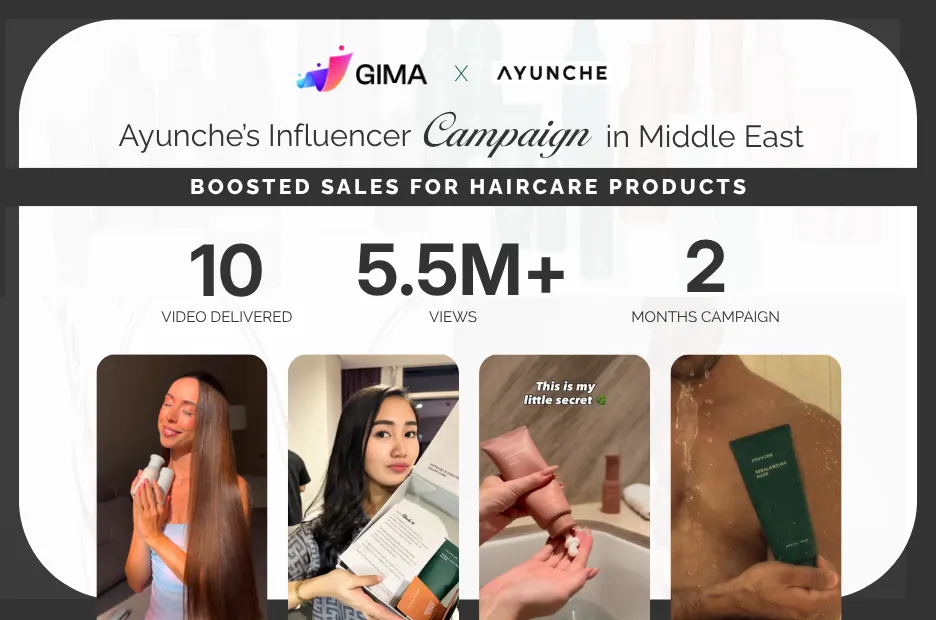
Ayunche, a premium Korean haircare brand, partnered with GIMA, a leading influencer marketing agency in Dubai, to launch an ROI-oriented influencer campaign.
Objectives:
The campaign aimed to increase sales and engagement through strategic influencer partnerships. It also focused on showcasing product utility and problem-solving benefits through real use and review content.
Strategy:
Beauty and haircare influencers with audiences that matched Ayunche’s target demographic were selected. Creators were briefed to make high-quality videos showing before-and-after results and to integrate products into their daily haircare routines. They were also asked to highlight how each item worked for different hair types.
Influencers:
The campaign included creators (both micro and macro) from the beauty, haircare, and lifestyle niches whose followers were relevant to the brand’s target market. The mix of influencers helped reach audience segments interested in haircare solutions.
Content:
Creators developed engaging content like tutorials, usage demonstrations, and transformation posts that showed real results and product benefits. These formats helped communicate product value to each influencer’s feed.
Results:
The campaign was a massive success. It ran for two months and delivered over 5.5 million views across video content, while also supporting the brand’s goal of boosting sales and engagement through authentic creator validation.
Bottom Line
Influencer marketing has undoubtedly become one of the top growth channels for beauty brands in the Middle East to acquire new customers, build awareness, increase sales, and retain existing customers. When planned with clear objectives, the right creators, and a structured strategy, it supports your full-funnel marketing strategy. For beauty brands, the focus should be on relevance, credibility, and execution with expertise, i.e., under the guidance of an influencer marketing agency, because when done right, influencer marketing provides tangible ROI and long-term business growth.