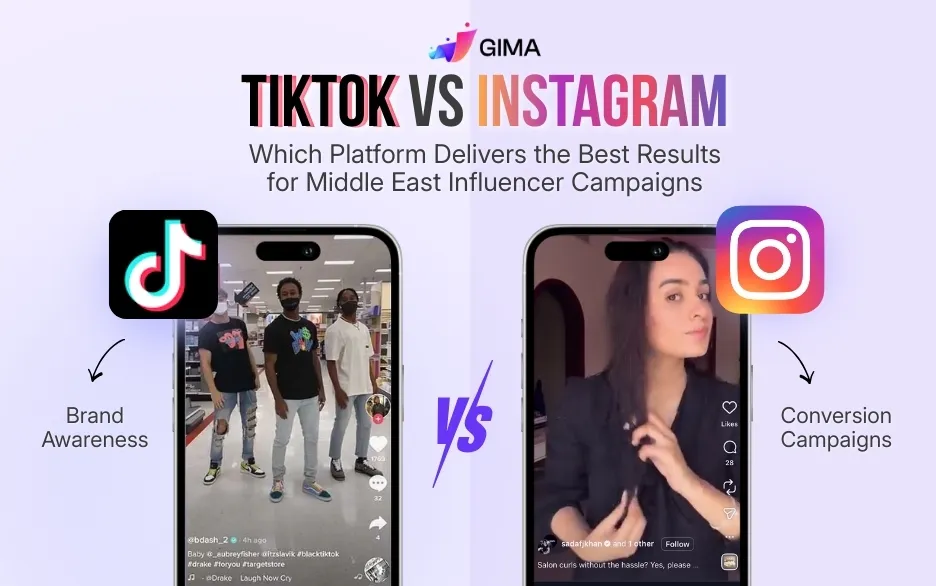
Both TikTok and Instagram have already proven to provide exceptional results for brands in the Middle East. In recent years, from Dubai to Riyadh to Kuwait, brands across industries have tapped influencers on both platforms to connect with their target audiences who live online.
Amidst all this, the real question that arises is-
“Which of the top 2 platforms works best for your brand when you’re targeting the Middle East?”
Intriguingly, the answer depends on what you want.
The kind of audience you want, the campaigns you want to run, and which you prioritize at the moment: reach or engagement?
What’s exciting right now is the Middle East influencer marketing domain is growing fast. Data shows that campaigns in this region are expanding at a healthy rate, with many global and regional brands leaning on influencer marketing to reach new markets and consumers in culturally diverse, socially connected markets.
Meanwhile, the two platforms show quite different strengths.
While both provide you with a wide access to new markets and customers to acquire, and can also help build your brand presence, TikTok is superior for brand awareness and viral engagement among Gen Z audiences across the Middle East. On the other hand, Instagram excels at driving direct sales, influencing product consideration, and building long-term brand authority with Gen Z as well as Millennials and older demographics.
In fact, a choice between the two becomes easier when you look at what each platform actually has to offer during an influencer campaign. And this is where the right guidance matters. Many brands in the region seek expertise from the top influencer marketing agency in the Middle East to help them understand these differences clearly, leverage their expertise and knowledge, and mould campaigns that fit each platform’s strengths.
Now we’ll dive into the core to figure out which platform delivers the best results for influencer marketing campaigns in the Middle East. But, before that, let’s understand in depth what exactly each of the platforms has to offer for their influencer campaigns-
TikTok v/s Instagram: Which Performs in Middle East Influencer Campaigns?
| Key Metrics | TikTok | |
|---|---|---|
| Primary Brand Goal | Brand awareness, viral growth, entertainment, and trending content. | Consideration, conversions, product education, visual storytelling, and long-term brand building. |
| Audience Reach (MENA) | Strong among Gen Z; high video consumption in Saudi Arabia, the UAE, and Kuwait. | Wider age coverage (Gen Z → Millennials → older demographics). Strong in the UAE & Saudi. |
| Engagement Quality | Higher average engagement rates; comments + shares driven by trend cycles. | Moderate engagement but stronger intent signals (saves, taps, replies, DMs). |
| Speed of Results | Fast reactions, quick bursts of reach, rapid spike in awareness. | Slower but steadier performance; good for nurturing consideration. |
| Content Style | Raw, reactive, trend-led videos; local humour and relatable storytelling. | Polished visuals, Reels with a clear storyline, Stories for product demos. |
| Consumer Behaviour | Users discover and share trends quickly; high entertainment mindset. | Users research, compare, save posts, and usually purchase from creators they trust. |
Now that we understand how each platform performs, let’s break things down by campaign goals. This makes it easier to see where TikTok fits and where Instagram naturally fits and works better in the Middle East.
Best Platform for Each Campaign Goal
Brand Awareness → TikTok
TikTok is known for its virality game. The platform gives brands quick visibility across the Middle East, especially among Gen Z. The pace of the platform and its trend-led culture help new content surface fast.
Trend Participation → TikTok
TikTok is where regional trends start and spread. Sounds, edits, and local humour pick up speed quickly, which makes it the better choice when you want to join cultural moments.
Product Research → Instagram
Consumers in the Middle East tend to check Instagram Reels and Stories when they want clarity before buying and when they want to know more about the brand. This is a basic consumer tendency. They compare, save posts, and come back to creator reviews.
Sales, Conversions & Retargeting → Instagram
Instagram’s recent features support stronger buying behaviour. Product tags, DMs, and creator recommendations help users promptly move through the purchase funnel, i.e., from interest to purchase more naturally and subtly.
Loyalty + long-term brand building → Instagram
Instagram’s mix of content formats helps creators build ongoing stories around your brand and brand story. This is where consistent visibility, familiarity, and trust grow over time.
Now that we’ve mapped each campaign goal to the right platform, the next step is understanding how to make the actual choice. Luckily, a simple framework can help you narrow things down based on who you’re targeting, what you’re promoting, and how quickly you want results.
How to Choose the Right Platform for Your Brand
1. Audience Match
- If your audience is largely Gen Z in the Middle East → TikTok tends to perform better.
- If your core base consists of Millennials or older demographics → Instagram provides a wider reach and stronger trust signals.
2. Campaign Goals
- Quick visibility and cultural relevance? TikTok.
- Product clarity, education, and conversions? Instagram.
- Sustained storytelling and long-term presence? Instagram.
3. Product Type
- Impulse-friendly, low-barrier products (F&B, beauty, trending items) work well on TikTok.
- Consideration-heavy products (skincare, fashion, tech, luxury) perform better on Instagram due to research behaviour.
4. Budget
- TikTok creators, especially nano and micro influencers, tend to be more cost-effective for awareness campaigns.
- Instagram creators can be more expensive, but they bring stronger purchase intent.
5. Required Speed of Results
- Need fast momentum? TikTok’s algorithm helps content take off quickly, and there’s a greater chance for virality.
- Need stable, reliable performance? Instagram builds traction steadily and supports ongoing brand presence.
With this framework in place, the decision becomes much clearer for brands trying to choose which platform is best for them to launch an influencer campaign. Now it’s time to bring everything together and answer the core question this entire guide has been building toward.
The Final Verdict
At the end of the day, there isn’t a winner in this race. The one that wins is the platform that matches your audience, your product, and the outcome you want. TikTok brings the reach. Instagram builds the appetite. And both platforms give you your desired result, if done right with expertise and long-term knowledge.
However, the best results come from matching your campaign goals to the platform’s strengths. Sometimes that means choosing one. Sometimes it means using both in different ways. What matters most is using each platform for what it’s naturally good at and letting your strategy follow that.